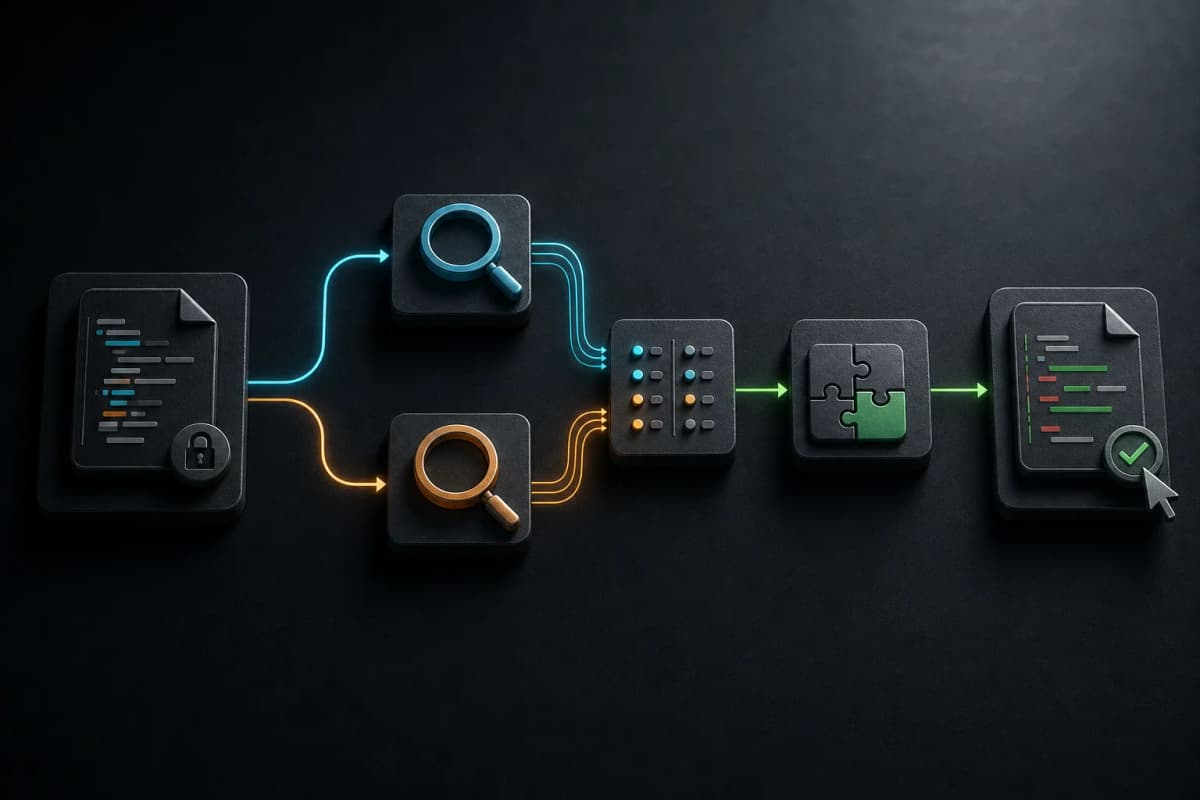
My first GPT-6 Astra review started with a CRM dashboard that would not load properly. I wanted the agent to find the cause, fix it, and show that the page worked. That seemed a useful way to spend the evening with a new model.
The work produced three concrete fixes: missing installation defaults, settings that failed to save selected users, and data loading broken by inconsistent model aliases. The dashboard then opened in a local test environment.
That is enough to make me interested. It is not enough to declare every other coding model obsolete.
This is an early hands-on account, alongside independent benchmark results and other builders' first impressions. The research reflects September 3-4, 2026. The CRM changes described here were local and uncommitted at the time of testing, not a production release.
What Is GPT-6 Astra Built For?
OpenAI positions Astra as a model for demanding work across code, browsers, documents, and other software. The API model is gpt-6-astra, with a 1,050,000-token context window and support for image input. Its new capabilities include asynchronous tool calls and instructions sent while a task is running. OpenAI model documentation, Astra guide.
For me, the interesting test is whether those capabilities help with an existing system. A working CRM has permissions, old assumptions, incomplete integrations, and users who expect yesterday's features to keep working. Generating a neat component is only one part of that job.
My GPT-6 Astra Review: Three Fixes in a Real CRM
I used an Astra-led Codex session to investigate a daily-work dashboard inside a Perfex CRM installation. The module already existed. Astra did not build the whole CRM, and earlier work in the project involved other models.
The first problem was in installation. The module checked for missing settings using the wrong return value. As a result, it could skip defaults it needed. The fix used the platform's existing, repeatable option-creation function.
The second problem was in the settings screen. Its script ran before jQuery was available, so the selected pilot users did not reach the fields submitted by the form. Waiting for the page to be ready fixed that path.
The third problem involved database-model aliases. Parts of the module loaded a model under one name and tried to access it under another. Explicit aliases corrected the mismatch. These were application models, not AI models.
Regression tests were added around all three failure modes. The session also checked the authenticated dashboard, history, and upcoming calendar in an isolated local database copy.
The useful part was the connection between the symptoms and the fixes. Installation, form behavior, and server-side loading each needed a different check. A screenshot of a rendered page alone would not have explained why it had failed.
Some connected data sources still reported warnings afterward, and growth suggestions remained blocked. I count that as unfinished integration work, not evidence that everything was ready to launch.
I also cannot turn this session into a speed comparison. I did not run the same tasks against another model with the same starting state and time budget. My guide to benchmarking AI models on real work describes the comparison I would want before making that claim.
What Other Builders Say About Astra
Claire Vo's early-access account describes progress on coding projects that had resisted earlier attempts with Sol and Fable. Her examples include a product-intelligence feature, browser-based QA, and work in creative tools. The browser-testing angle is especially relevant to my experience: writing a fix and checking its behavior belong in the same workflow. These are her reported experiences, not a controlled comparison. Claire Vo's hands-on review.
Matt Shumer's early review highlights backend engineering, continuity in long conversations, and clearer progress updates. He also names drawbacks: Astra can be slower than he would like, and he still prefers Claude's visual taste and asset creation. He reports using Medium reasoning for everyday work and Ultra for larger experiments. That is a useful starting point to test, not a universal setting. Matt Shumer's review.
The community reaction is less uniform. One r/codex discussion argues that automation and efficiency matter more than the GPT-6 label, while questioning whether the benchmarks justify the launch hype. I would treat that as a sample of the debate, not a survey of developers. Community discussion.
Astra Benchmarks: Read the Cost Column Too
Artificial Analysis reports the following launch results:
| Measure | GPT-6 Astra | GPT-5.6 Sol | Claude Fable 5.1 |
|---|---|---|---|
| --- | --- | --- | --- |
| Coding Agent Index | 67 | 65 | 70 |
| Intelligence Index | 61 | 61 | 66 |
These are index points, not task success percentages. The coding comparison evaluates Astra and Sol in Codex, and Fable in Claude Code, so it compares model-and-tool setups rather than isolating the models.
At max effort, Astra used roughly one third of Sol's tokens in the coding evaluation and cost about the same per task. The broader Intelligence Index tells a different story: similar overall performance to Sol, but about 75% higher cost per task. Efficiency depends on the workload. Artificial Analysis methodology and results.
For a team deciding where to spend its budget, I would measure how much review and rework remains after the agent stops. A shorter response is useful only if the work is correct. A longer run can pay off if it resolves a difficult problem, but duration alone proves nothing.
Five Tips for Getting Useful Work From Astra
1. Define What Finished Means
Describe the failure and an observable acceptance test. Ask for reproduction, a scoped fix, and a check of the affected user flow.
2. State Its Permissions Clearly
Astra may pause for clarification. Specify which local actions it may take. Keep deployment and external messages behind separate approval.
3. Keep Project Instructions Consistent
Audit AGENTS.md and relevant skills. OpenAI warns that conflicting instructions can interrupt progress. Remove obsolete or contradictory rules.
4. Match Testing to the Change
Request checks that catch the actual failure. Astra can over-expand testing on small tasks; extra checks should address unresolved questions.
5. Give Reviewers a Specific Job
For risky changes, assign a reviewer permissions, failure handling, or regressions. Explain when to delegate; Astra may do so less often than expected. Official prompting guidance.
My multi-agent code review workflow keeps independent review separate from the final writer. I would use that structure for a substantial change, rather than ask several agents to edit the same files at once.
Where I Would Use Astra Next
My next tests would involve backend bugs across several layers, integration problems with misleading symptoms, and browser checks after a code change. Those are useful tests of the strengths early reviewers describe.
I would keep a separate comparison for visual design. I would also compare completed-task cost before routing routine work to a more expensive model.
The CRM session gave me a concrete reason to keep testing Astra: three failures were understood and repaired, while the remaining integration problems stayed visible. I want an agent that can make that distinction. A local dashboard opening successfully is progress. A reviewed, deployed feature with healthy integrations is a different milestone.
*Disclosure: this article was prepared with AI assistance from a review of my Git changes, session records, and the linked sources. The hero is an editorial illustration, not a screenshot of the CRM.*