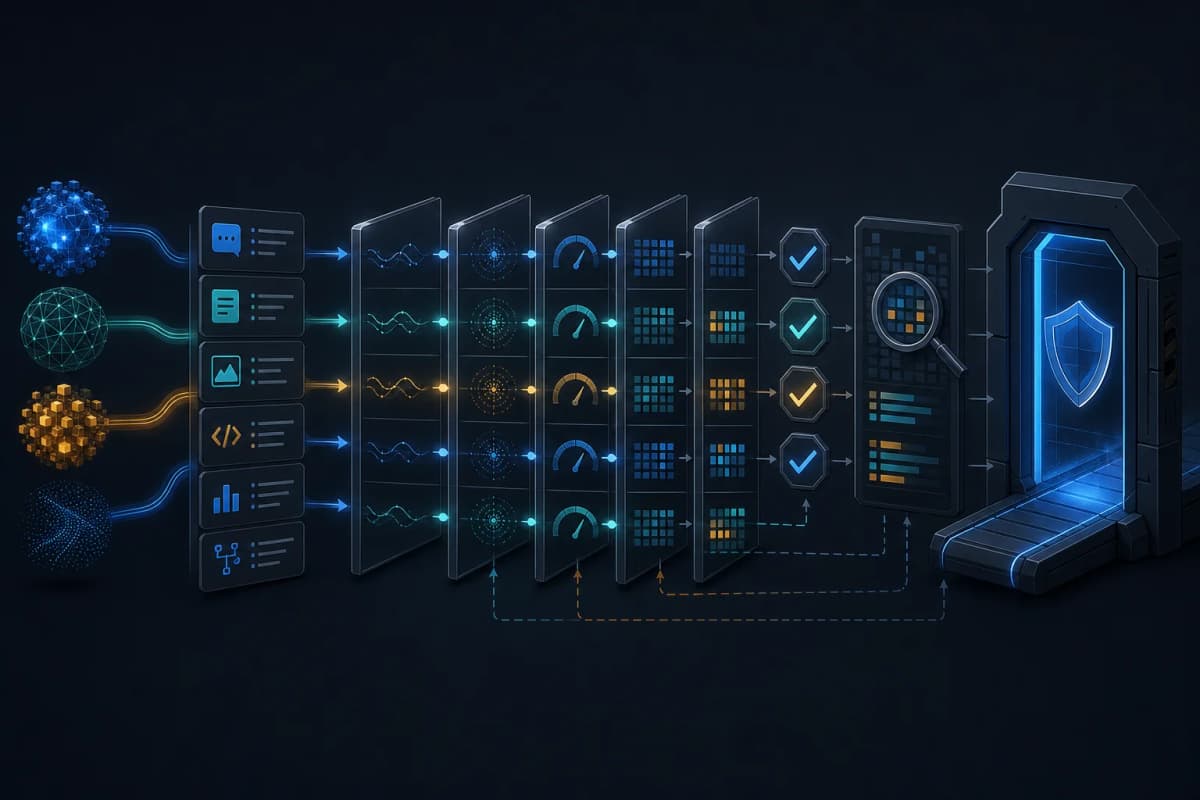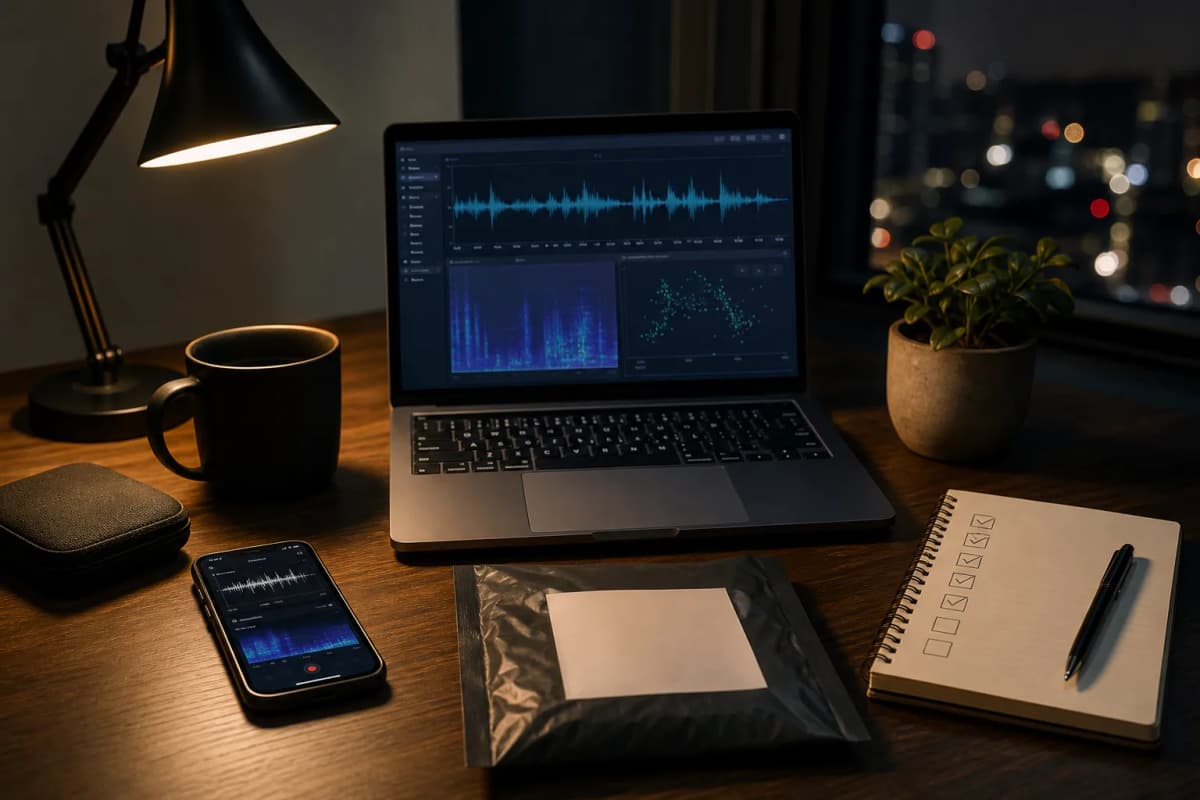
July's AI engineering build log includes public releases, controlled tests, internal builds, and deliberate non-releases. The useful story is the boundary between them because software rarely moves through one clean state.
This log covers what reached users, what remained inside TestFlight, what I verified only in a simulator or debug build, and what stayed blocked. I use "shipped" narrowly. A local build is not public. A passing test is not adoption. A public listing is not revenue. An approval gate that sends nothing can be the correct production result.
The practical rule behind the month was release discipline: define the state, verify the artifact from the outside, and keep the blast radius small when a feature fails.
July 2026 AI engineering build log at a glance
| Outcome | State | Evidence | Lesson |
|---|---|---|---|
| --- | --- | --- | --- |
| Memento Capture 2.3.7 | Public | Signed and notarized DMG, synchronized manifest and site, fresh-download verification | Verify the artifact users receive |
| Mix Analyzer key detection | Live | Major/minor detection checked with 24 controlled known-key progressions | Controlled inputs beat convenient anecdotes |
| Mix Analyzer token recovery | Live | Failed-analysis recovery is visible and owner-scoped | Recovery belongs in the product contract |
| Kiddays waitlist | Live | Double opt-in plus English and Swedish routes, canonicals, and sitemap | Consent and discovery ship together |
| Kiddays Premium build 74 | Internal TestFlight | Internal build with 166 tests; purchase, restore, trial-expiry, and App Review work pending | Test count proves coverage effort, not release impact |
| Internal CRM lead list | Live | Mobile-verified list, search, and five quick filters in an upgrade-safe implementation | Admin tools need release discipline too |
| Two Apify SEO Actors | Public | Scoring and rewriting actors reject empty input | Public availability is not monetization |
| BroTider onboarding build 27 | Internal-only TestFlight | Simulator-verified onboarding build | Internal distribution is not an App Store launch |
| FactCheck, outreach, Frame Insight | Blocked or debug-only | No FactCheck launch, no outreach send, Frame Insight kept behind debug | Honest non-release states prevent false claims |
Memento Capture 2.3.7 had to survive the public release path
I released Memento Capture 2.3.7 as a signed and notarized DMG. That statement only became useful after the rest of the release path matched it. I synchronized the update manifest and website, then performed a fresh download and verified the result.
A local archive can be correct while the public site serves an older file or the manifest points elsewhere. The release is the artifact a visitor can download from Memento Capture download page, not the file on my machine. The Memento Capture support page is the public handoff if the downloaded build needs follow-up.
The same principle applies when I make a website callable by agents: an API response or successful build is not enough. The public state must match the intended state. I described that approach in how I built an agent-ready website→.
Mix Analyzer improved through controlled evidence and visible recovery
Key detection: controlled evidence first
The key-detection work in Mix Analyzer was easy to overstate, so I constrained the claim. I tested major/minor detection with 24 controlled progressions whose keys were known in advance. That gave me a repeatable input set and a clear expected answer.
Twenty-four progressions do not prove universal accuracy. They do not cover every recording, borrowed chord, modulation, or production style. They verify movement in the right direction under one controlled set. The method and limitation are documented in the major/minor key detection update, and the release state appears in the Mix Analyzer changelog.
I could not retest the two original songs because those files were unavailable. I am leaving that gap visible instead of replacing it with a confident reconstruction. If the inputs cannot be reproduced, the old case cannot become new evidence.
Failed-analysis recovery: visible and owner-scoped
The month also included a live recovery path for failed analyses. Token recovery is now visible and owner-scoped, so the recovery state can be seen and stays tied to the correct account.
My rule is to define the expected outcome before the run and separate a controlled pass from a production claim. I use that framework when I benchmark AI models on real work→, and it applies just as well to audio analysis.
Kiddays shipped a public waitlist, while Premium stayed internal
Waitlist: public
Kiddays had two release states in July. The waitlist became public with double opt-in, English and Swedish routes, correct canonicals, and sitemap coverage. Consent, delivery, localization, and search discovery had to agree.
Double opt-in prevents an email address from becoming an active subscription merely because somebody entered it. Canonicals define how the localized pages relate, while the sitemap makes them discoverable. I have written separately about the secure beta waitlist pattern→ behind this kind of release.
Premium: internal TestFlight
Kiddays Premium did not reach the same state. Build 74 was available through internal TestFlight and had a 166-test suite. Purchases, restore behavior, trial expiry, and App Review remained pending. I am not calling it an App Store release, a completed subscription system, or a customer outcome.
The number 166 describes a verification surface. It does not say how many people will use Premium, whether the purchase flow will pass review, or whether the product creates value. Tests can show that known behavior remains intact. They cannot substitute for distribution, review, or real use.
The quieter releases still changed daily operations
Internal CRM: live but private
I shipped a lead-list improvement inside an unnamed internal CRM. The live result was mobile-verified and included search plus five quick filters. I kept the implementation upgrade-safe so it did not depend on editing a fragile core surface that could be overwritten later.
This was not a public product launch, and the customer context stays private. Internal admin software still deserves the same care as a customer-facing page. A list that works on desktop but fails on a phone is unfinished when staff use both.
Apify Actors: public, not monetized
I also made my first two SEO Actors public on Apify. One scores article SEO; the other supports rewriting. Both reject empty input rather than spending resources on a request that cannot produce a useful result. Public means people can find the actors. It does not mean they generated revenue, gained adoption, or proved a market.
BroTider: internal-only
BroTider onboarding build 27 reached another bounded state: simulator-verified and distributed through an INTERNAL_ONLY TestFlight path. It was not an App Store release. Simulator verification gave me evidence about onboarding in that environment, not device-wide behavior or public readiness.
Three things did not ship, and that was part of the work
FactCheck remained blocked. I did not turn an unresolved launch state into a release announcement.
The outreach workflow sent nothing because its approval gate held. That is the intended behavior. Drafting and preparing recipients do not authorize an external message. A system that pauses before a consequential action is useful even when the send count is zero. My article on deterministic AI agent permissions→ explains the principle: the model may propose an action, but policy and the owner decide whether it runs.
Memento Frame Insight remained debug-only. Debug output can prove that a path executes and expose wrong assumptions. It is not a user-facing feature, a supported workflow, or a promise that the feature will ship unchanged.
I want monthly logs to preserve these non-releases. Removing them would make the month look cleaner and the engineering record less useful.
What July changed about how I ship
Four rules came out of the month.
The last rule also shapes how I think about trajectory-level sandbox controls→. Long-running automation gets many chances to find weak combinations of individually reasonable controls. Small scopes and independent verification reduce that risk.
Build and test numbers belong here because they show what I checked. They are not impact metrics. A commit count measures repository activity. A test count measures a defined suite. A build number identifies an artifact. None tells me adoption, satisfaction, revenue, or user value without separate evidence.
Evidence and review note
Before saving this draft, I checked the public Memento download and support pages, Mix Analyzer's changelog and product update, and my Apify profile. Internal TestFlight, blocked, and debug-only items remain labeled as such. These sources establish release state; they do not prove adoption or revenue.
What carries into August
August starts with unfinished boundaries rather than a new list of promises. Kiddays Premium still needs purchase, restore, trial-expiry, and App Review work before I can describe it as publicly released. BroTider still needs evidence beyond simulator verification and internal TestFlight before any App Store claim. FactCheck remains blocked until its launch condition changes. Frame Insight remains an experiment until it leaves debug-only status.
For Mix Analyzer, the controlled key set remains the evidence I have. The two unavailable original songs remain an explicit gap unless those inputs become available again.
I will keep the same reporting rule: say what changed, attach the strongest evidence I have, and leave the unsupported outcome blank. If you build similar AI, app, or automation systems, follow along or send me a note about the release boundary that causes you the most trouble.