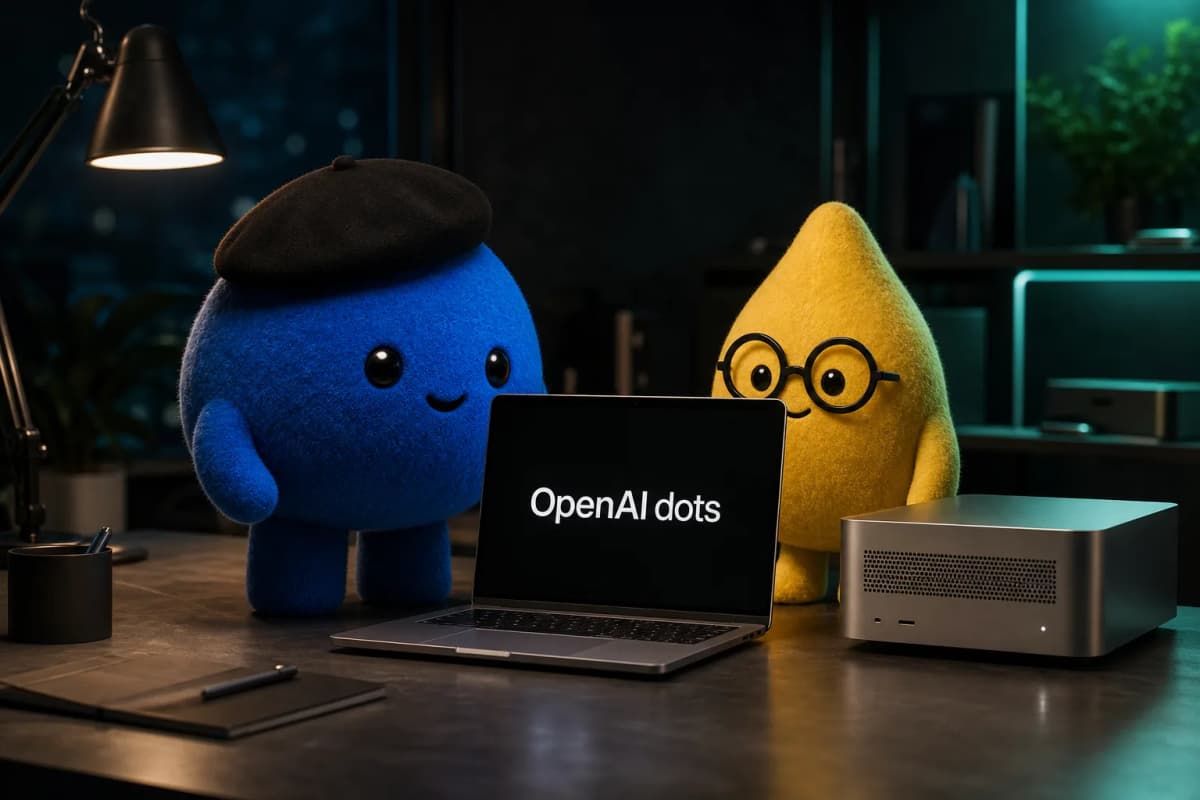
I already use Hermes to automate most of the day-to-day work in my business. OpenAI Dots still makes me want to try something new.
That might sound contradictory. I have an agent setup I like, and I prefer Hermes after testing both Hermes and OpenClaw. But maintaining your own agents takes work. If OpenAI can make ongoing automation easier to manage without hiding the important controls, I want to see it.
There is one catch: I cannot try Dots through the Pro rollout in Sweden yet. This is my first take on the launch, based on the documentation and early reactions, not a hands-on Dots review.
What is OpenAI Dots?
OpenAI announced Dots on September 29, 2026. These are persistent agents powered by GPT-6 Astra, with their own cloud computer and browser. They can work between conversations, use connected apps, and bring results back for your review. OpenAI's launch examples include preparing an invoice for approval and turning product feedback into proposed code changes. OpenAI: Introducing dots.
The appeal is continuity. I want to give an agent a responsibility and come back to useful progress, rather than reconstruct the whole job every time I open a chat.
OpenAI documents background agents, scheduled work, memory, and delegation to ChatGPT Work or Codex. Cloud work can continue with your laptop off. Work on your connected personal computer still needs that computer online with the ChatGPT app open. Meet dots.
That distinction matters. An agent can coordinate work from the cloud, but it cannot use an unavailable local machine.
Why I want to test Dots when Hermes already works for me
I have already moved a large share of my business workflow into agent-assisted automation. Hermes is part of how I work, not something I installed for a weekend demo.
My preference for it comes from control. I can shape the setup around my workflows, choose the tools I need, and keep the operating environment under my management. I covered that choice in my Hermes vs OpenClaw comparison.
Dots interests me because I would like to spend less time maintaining the agent and more time using the results. I want to find out how well it handles an ongoing responsibility, remembers corrections, and brings me decisions without filling my day with notifications.
A finished draft with its sources is useful. A confident message saying the work is done, without evidence, creates another job for me.
I am excited to test that difference. I am not planning to retire a working Hermes setup because OpenAI released a polished demo.
OpenAI Dots vs Hermes vs OpenClaw
All three address persistent agent work. The differences are in who runs the system, how you extend it, and how much operational responsibility you keep.
| Question | OpenAI Dots | Hermes Agent | OpenClaw |
|---|---|---|---|
| Where does it run? | OpenAI cloud computer; optional connected local computer | An environment you operate, including a server or cloud VM | Your own computer or a managed deployment you operate |
| Model choice | GPT-6 Astra powers Dots | Multiple providers and compatible endpoints | Hosted and local model providers; swappable model plugins |
| Ongoing work | Background work, memory, schedules, delegated tasks | Persistent memory, reusable skills, scheduled jobs | Gateway-based assistant with memory and automation |
| Extension path | Supported ChatGPT plugins and permitted local skills | Skills, tools, plugins, and MCP integrations | Tools, skills, plugins, and messaging channels |
| Main trade-off | Managed experience within OpenAI's access and permission system | More control, with setup and maintenance to own | Flexible assistant infrastructure, with configuration and security to own |
This is a documentation-based architecture comparison, not a performance ranking. Sources: Meet dots, Hermes Agent Documentation, and the OpenClaw repository.
Hermes separates persistent notes from reusable skills and documents scheduled jobs with delivery to messaging platforms. Those features explain why the broad Dots idea feels familiar to people already running agents. They do not prove that either product handles the same job equally well. Persistent Memory, Skills System, Scheduled Tasks.
Self-hosting also needs an honest definition. Keeping agent state on your hardware does not keep every prompt there. If you connect a hosted model or external tool, that provider can receive the information needed for the request. OpenClaw states this explicitly in its documentation. OpenClaw repository.
Is Dots an OpenClaw 2.0?
As a description of the product direction, I understand the question. Both aim to make an assistant that keeps working, remembers context, and meets you where you already communicate.
The ownership story needs correcting, though. Peter Steinberger announced on February 14, 2026 that he was joining OpenAI and that OpenClaw would remain open and independent under a foundation. He described his next ambition as making agents accessible to people beyond the technical early adopters. OpenClaw, OpenAI and the future.
OpenClaw's current repository goes further: OpenAI is a donor, not an owner. OpenClaw repository.
So I would not call Dots a purchased OpenClaw rebrand, an official successor, or proof that OpenAI is running the OpenClaw codebase. The sources I checked do not establish those claims.
My reading is narrower: Dots brings a familiar always-on-agent concept into a managed ChatGPT experience. "OpenClaw 2.0" works as a provocative question about usability. It is a poor substitute for the facts about ownership and implementation.
Why Dots is not available to me in Sweden yet
The launch restrictions depend on your plan. OpenAI excludes the European Economic Area, Switzerland, and the UK from the Pro rollout. Sweden falls within that restriction.
Business Premium has a different rollout: OpenAI lists access across supported ChatGPT regions. Enterprise users can try the beta when their administrator enables it. Eligible accounts may still wait several days for access. Getting started with your dot.
That means "Dots is unavailable in Sweden" is too broad. The accurate statement for me is that the Pro rollout does not include Sweden at launch. I look forward to trying it when I have supported access.
What are other people saying about Dots?
Launch-day discussions show curiosity, frustration, and practical doubts. They are early reactions, not a reliable verdict on weeks of production use.
In the r/OpenAI discussion Yay or nay?, one Hermes user was happy with their existing setup and interested in trying Dots, while other commenters objected to plan restrictions. That combination makes sense to me: you can like your current tools and still want to test a more integrated alternative.
In r/technology's OpenAI Introduces Dots: Always-On, Long-Running Agents, a commenter familiar with Hermes and OpenClaw questioned the lasting value for ordinary users outside coding. Another described failures and excessive token use in their own complex agent setups. Those are individual accounts, not controlled comparisons with Dots.
The r/accelerate discussion Cute always on agents. included concern about handing a new agent personal data and payment access. I share the need to verify boundaries before expanding access, even though I am enthusiastic about the product.
What I will test first
Start with a bounded job
I will start with a bounded job: review a small set of project updates and prepare a brief with source links. No customer messages, publishing, purchases, or production changes.
Check the work that comes back
I want to check three things:
I will compare it with Hermes on completed output, manual corrections, elapsed time, and usage where the product exposes it. I do not have comparative results yet.
OpenAI's controls deserve attention here. Automatic action review and custom rules help define boundaries, but OpenAI warns that Dots can make mistakes. Pausing the main agent also does not automatically stop every delegated task or cancel every schedule. Control your dot.
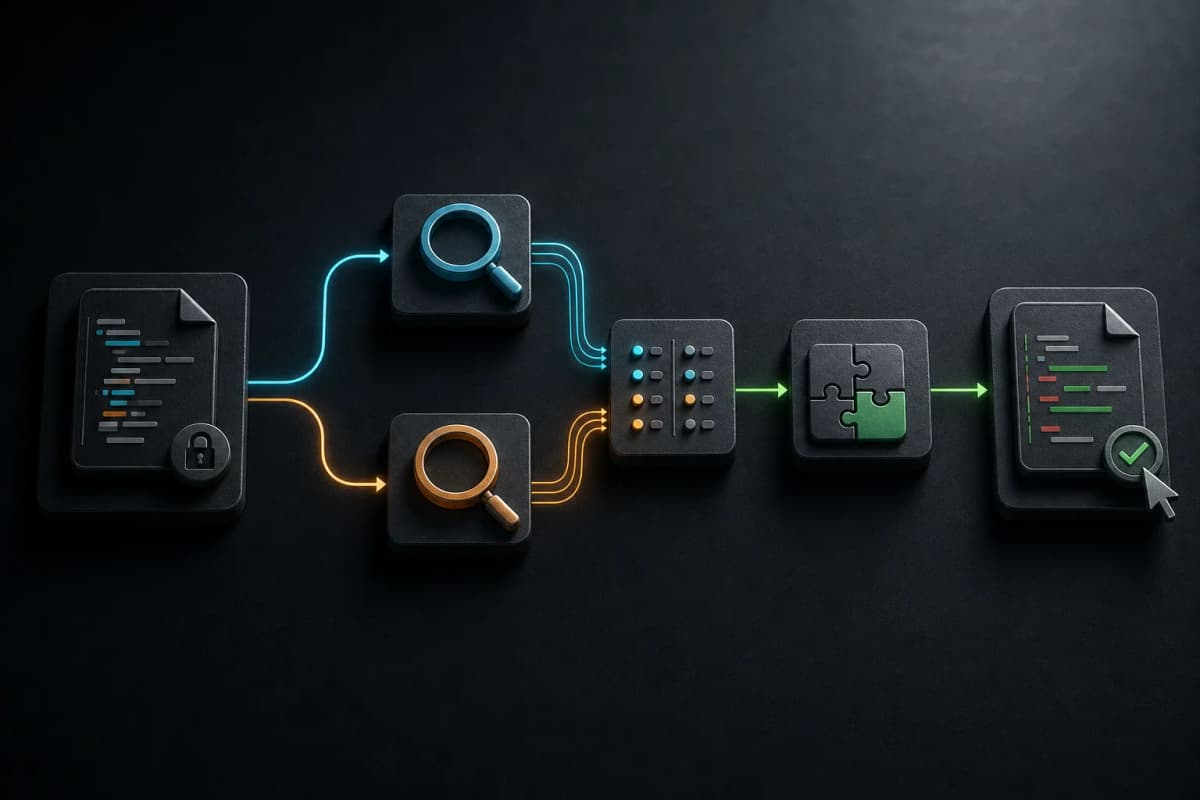
That is exactly the kind of operational detail I want to test before trusting an agent with more of my business. My multi-agent code review workflow follows the same principle: separate preparation, review, and the final action.
For now, Hermes stays. I am looking forward to Dots because I want to see whether OpenAI can make this way of working easier to run day after day. I already know I want agents in my business. The next question is how much work the agent can take off my hands without creating more work to supervise it.
Research checked September 29, 2026. Availability and product behavior may change. The hero is an AI-generated editorial illustration, not an official screenshot.