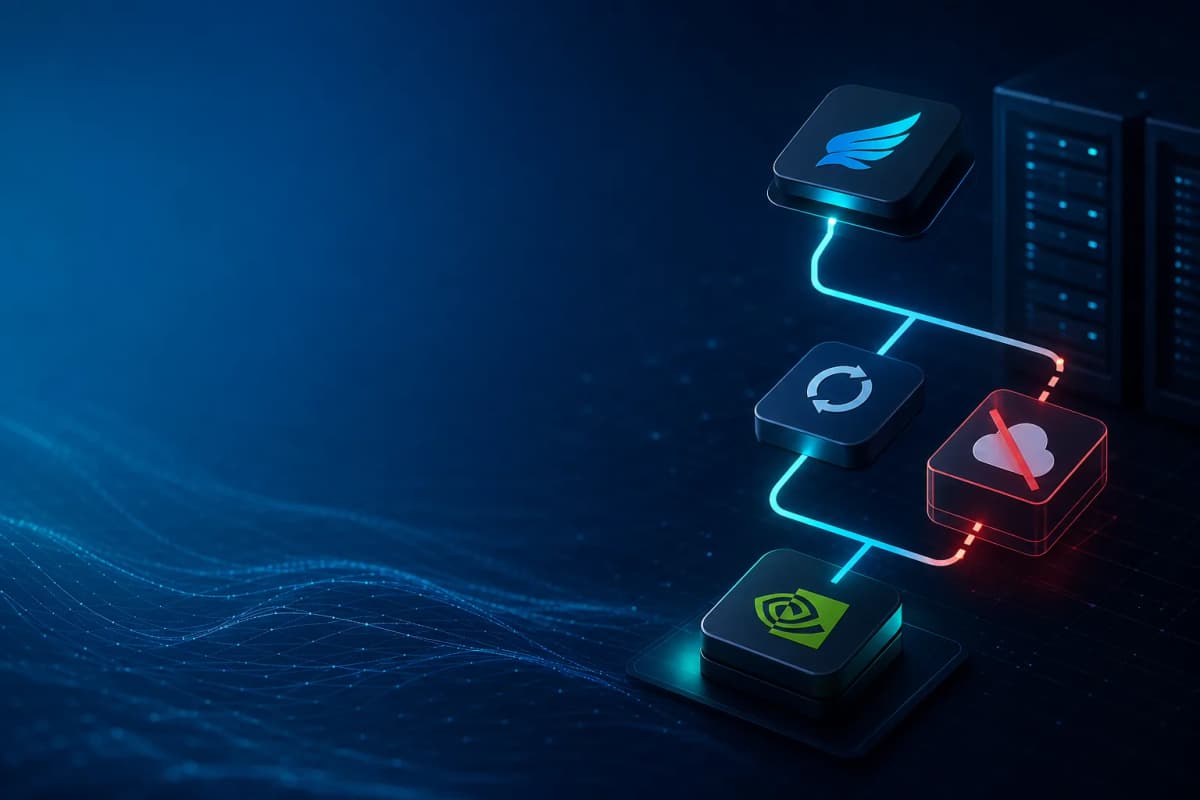
I have been testing both Hermes and OpenClaw on a self-hosted Raspberry Pi agent setup, and the short version is simple: I prefer Hermes.
That is not because OpenClaw is bad. OpenClaw is impressive, especially if what you want is a broad personal AI assistant that can sit behind messaging channels and feel like a local-first assistant. According to the OpenClaw docs, it is built around an any-OS gateway for AI agents across WhatsApp, Telegram, Discord, iMessage, and more. That is a strong idea.
But after trying both in a real local environment, Hermes feels closer to how I actually want to run agents: separated roles, reusable skills, memory that becomes operating context, and background workflows that can keep working without becoming one giant messy assistant.
This Hermes vs OpenClaw comparison is not a benchmark. It is a practical note from running both on my own hardware.
Hermes vs OpenClaw in plain terms
The way I see it, OpenClaw is strongest as a messaging-first personal AI assistant. It gives you a local agent gateway, familiar workspace files, and a growing ecosystem around channels, sessions, skills, web surfaces, cron jobs, and companion apps. If your main question is “how do I message an AI agent that lives on my own hardware?”, OpenClaw gives you a clear answer.
Hermes is different. According to the Hermes Agent GitHub repository, it is a self-improving AI agent with a learning loop, skills, memory, messaging, MCP integration, cron scheduling, context files, and migration support from OpenClaw. That language matches how it feels in practice. Hermes is not only about talking to an assistant. It is about turning repeated work into reusable behavior.
That difference matters more than the feature checklist.
With OpenClaw, I felt like I was configuring a powerful assistant. With Hermes, I felt like I was shaping a small operating layer for work.
My setup is not a demo anymore
This matters because a Raspberry Pi agent setup can quickly move from “interesting experiment” to “always-on operational tool.”
Once an agent starts helping with maintenance, research, content, admin tasks, or recurring checks, the problem changes. The question is no longer only whether the model can answer. The question becomes whether the system has clear boundaries.
That is the part I care about. I do not want one agent with access to everything and a vague personality. I want smaller operational identities:
Hermes made that structure feel natural. I can shape each role with its own instructions, memory behavior, tools, and approval stance. A high-risk workflow can be conservative and stop on uncertainty. A content workflow can be more creative. A maintenance workflow can be direct and checklist-driven.
That is closer to real operations than a single assistant that tries to be everything.
The profile boundary is the product
The most important thing I learned is that agent quality is not only about the model. It is also about the boundary around the model.
A finance-related assistant should not behave like a content assistant. A maintenance assistant should not behave like a research assistant. A memory-writing assistant should not casually collect noisy temporary facts. Each role needs a narrow job, a clear tone, and a permission model that matches the risk.
Hermes makes that design feel ordinary. I can separate the work before the model ever sees the task.
That is why Hermes vs OpenClaw is not just a technical comparison for me. It is a workflow comparison.
What I liked about OpenClaw
OpenClaw still has real strengths. It is easy to understand why people are excited about it. The project is built around the idea of a local assistant that you can message from different surfaces, and its docs cover sessions, cron jobs, security, web surfaces, skills, remote access, and mobile companion apps.
The OpenClaw GitHub repository also shows the scale of the ecosystem. It is a TypeScript-heavy project with a lot of community momentum. If your goal is to experiment with a personal assistant that talks through messaging apps, OpenClaw is a serious option.
I also like the file-based personality model. The OpenClaw workspace pattern uses familiar files for identity, instructions, tools, and user context. That is a good mental model: the agent has a home, a role, local notes, and memory.
There is something clean about that. It is understandable. It is easy to explain. It makes the assistant feel less disposable.
But for my use case, it still felt more like a general assistant platform. I could make it useful, but I had to push harder to get the same feeling of separated operational roles.
Why Hermes fit better
Hermes feels more like an agent operating system for people who want to keep improving their workflows.
The biggest difference for me is the way Hermes supports persistent, scoped work.
I do not want an assistant that remembers random trivia. I want a system that remembers how work should be done: what style to use, when to stop, what needs verification, what should never be sent externally without approval, and which kinds of tasks belong to which role.
That kind of memory is practical. It is not about making the agent feel more personal. It is about making repeated work less fragile.
Hermes also makes profile separation feel clean. A sensitive workflow can have strict rules. A research workflow can focus on evidence. A content workflow can focus on structure and clarity. A maintenance workflow can focus on checks, logs, and recovery.
For me, that is where Hermes wins: not in a feature checklist, but in operational discipline.
The Raspberry Pi angle
Running this on a Raspberry Pi also changes how I think about agent frameworks.
A Pi is small, cheap, always on, and boring in the best way. That makes it a good home for background agents. But it also forces discipline. You cannot treat it like an infinite cloud workstation. You need clear processes, logs, profiles, and limits.
Hermes has been easier for me to map onto that reality. I can run focused background workflows, keep memory scoped, use scheduled routines, and connect the system to useful work instead of only running experiments.
OpenClaw can also run locally and has strong messaging-first ergonomics. But my personal preference is Hermes because it feels less like a clever assistant and more like infrastructure I can keep shaping.
This is also why I still think about the earlier agent work I wrote about in Building AI Agents That Actually Work→. The core problem is not “can an agent answer?” The real problem is whether the system can keep working with oversight, traceability, and useful boundaries.
Where OpenClaw may still be the better choice
I would not tell everyone to choose Hermes.
OpenClaw may be a better fit if you want the fastest path to a personal assistant you can talk to through messaging apps. It may also be better if you want to ride the larger ecosystem, test community integrations, or experiment with a more consumer-feeling assistant layer.
That is valuable. A lot of people do not want to design operational profiles. They want one assistant that lives on a box and responds from their phone.
For that, OpenClaw makes sense.
Hermes becomes more interesting when your question changes from “can I message my agent?” to “can I build several agents that keep improving specific workflows?”
That second question is my question.
The privacy point
One thing I would not ignore with either tool: local agents are powerful.
Once an agent can read files, run commands, use browsers, talk to APIs, or interact with business systems, it is no longer just a chatbot. It is infrastructure with permissions. That means approval rules, scoped profiles, memory hygiene, and conservative defaults matter.
It also means you should be careful about what you publish publicly. A blog post can talk about architecture and lessons without exposing hostnames, exact paths, client names, profile names, tokens, private workflow details, or anything that would help someone map your real system.
That is another reason I lean toward Hermes. My current setup pushes me toward separation: different roles, different jobs, different memory, different expectations. That does not make it automatically safe, but it makes safety easier to reason about.
A mistake in a draft is one thing. A mistake in a sensitive workflow is different. The agent setup should reflect that.
This is also why I keep coming back to the same lesson from AI-assisted development: speed only matters if the system stays reviewable. I wrote about that from a coding angle in AI-Assisted Development: 102 Commits in 7 Days as a Solo Dev→. The same logic applies here.
My current conclusion
If someone asked me which one to try first, I would answer based on what they want.
If they want a broad messaging-based personal assistant with a big ecosystem, OpenClaw is worth testing.
If they want a more structured system for long-running, self-hosted, work-specific agents, I would start with Hermes.
For my own Raspberry Pi setup, Hermes is the better fit. It matches how I actually build: small focused roles, reusable skills, persistent memory, scheduled routines, and clear operating boundaries.
OpenClaw showed me the shape of local AI assistants. Hermes feels like the one I can keep living with.
That is my Hermes vs OpenClaw takeaway after testing both: OpenClaw is exciting, but Hermes fits my actual agent work better.