AI reasoning tokens are becoming one of the most important parts of modern AI performance.
OpenAI and Anthropic now expose the tradeoff more clearly than before. OpenAI has reasoning.effort. Anthropic has extended thinking and budget_tokens. Both controls point to the same pattern: on hard tasks, better results often come from giving the model more room to think.
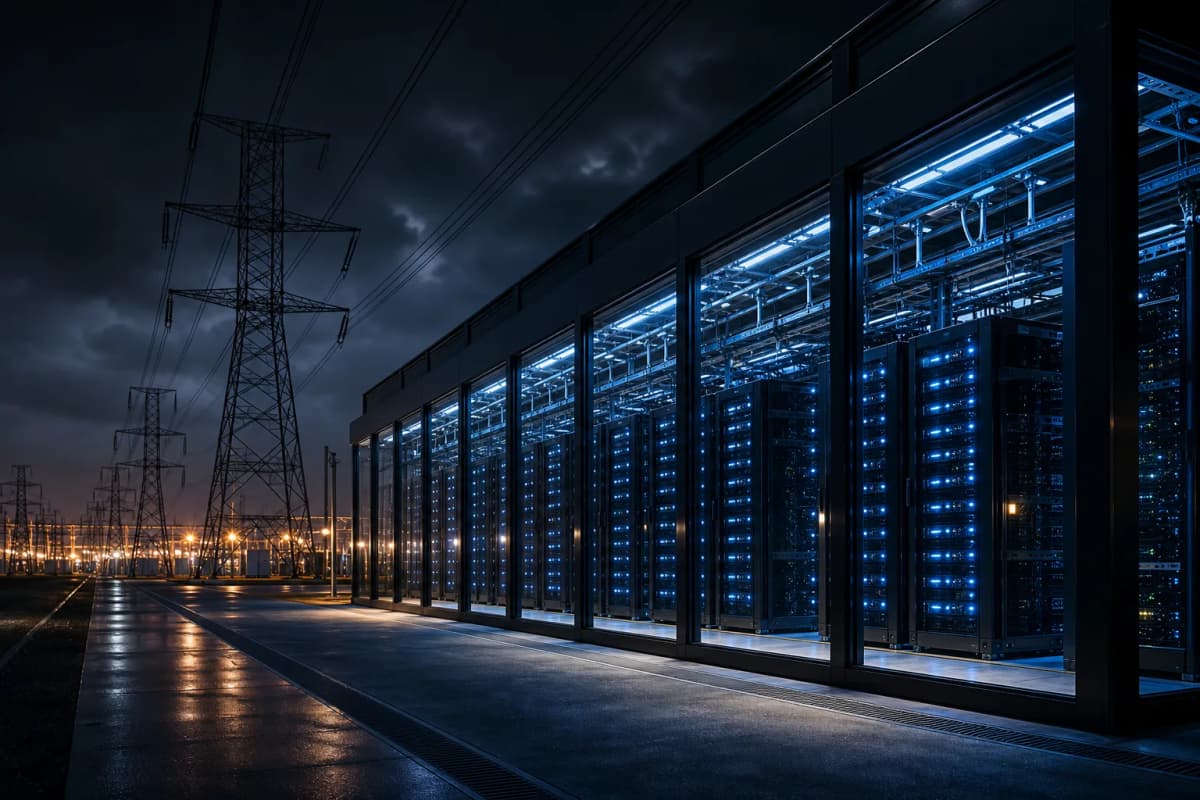
That is useful for coding, research, planning, math, and agent workflows. It also means the AI industry is moving more work into inference time. More reasoning tokens mean more accelerator time, more cooling, more data center capacity, and more electricity.
My read is simple: the model race is becoming an infrastructure race.
What Are AI Reasoning Tokens?
AI reasoning tokens are tokens a model spends while working through a problem before or alongside the final answer. Some of that work may be hidden from the user. You do not always see the reasoning text, but the provider still has to run the computation.
OpenAI’s reasoning documentation says reasoning.effort controls how much reasoning a model performs. Lower effort favors speed and fewer tokens. Higher effort can produce more complete answers on complex tasks. OpenAI also explains that reasoning models can use hidden reasoning tokens in addition to input and visible output tokens.
Anthropic describes the same class of tradeoff with Claude extended thinking. Its docs say budget_tokens sets the maximum number of tokens Claude can use for internal reasoning. Larger budgets can improve response quality on complex problems, although the model may not spend the full budget and gains can flatten at higher ranges.
The important distinction is this: longer final answers are not the goal. Better intermediate reasoning is the goal.
Why More Tokens Can Produce Better AI Results
Reasoning models improve when they have enough budget to inspect the task, test possible answers, correct mistakes, and use tools without rushing. A small token budget can work for simple prompts. It often fails when the work has hidden dependencies.
I see this most clearly in coding agents. A cheap fast pass can rename a variable or explain a small function. The same mode struggles when the task needs repo context, tests, browser verification, deployment constraints, and a judgment call about what not to touch.
The model needs budget to do the boring parts well:
That workflow burns tokens. It also produces better software than a quick guess.
I wrote about that from my own usage in code agents after 21.54 billion tokens→. The useful lesson was not that one model fixes everything. The system around the model matters: context, tools, verification, memory, and enough budget for the agent to use them.
OpenAI and Anthropic Are Turning Compute Into a Product Setting
The new model controls make intelligence feel adjustable.
A provider can now offer different behaviors from the same model family: fast answer, balanced answer, deep reasoning, long-context agent work, or high-effort tool use. The user may not care about the internal token count. The product still has to pay for it.
For builders, this changes routing. You do not want maximum reasoning on every request.
| Task type | Better default |
|---|---|
| --- | --- |
| Formatting, extraction, short rewrites | Low reasoning effort |
| Normal research, code edits, support analysis | Medium reasoning effort |
| Production code changes, legal review, financial logic | High reasoning effort |
| Multi-step agents with tools and verification | Extended thinking or larger reasoning budget |
This is where OpenAI and Anthropic are converging. They expose different APIs and product language, but both are teaching builders that intelligence is not one fixed setting. It is a budget decision.
That is also how I think about model routing in pieces like OpenAI GPT-5.6 Sol, Terra, and Luna→ and 24h with Claude Fable 5→. The best model is not always the largest model. The best route is the one that matches the task.
The Infrastructure Problem Behind Reasoning Tokens
Every extra reasoning token has to run somewhere.
The International Energy Agency estimates that data centers used about 415 TWh of electricity in 2024, around 1.5% of global electricity consumption. In its base case, global data center electricity consumption roughly doubles to around 945 TWh by 2030. The IEA also points to AI-driven accelerated servers as one of the key drivers of future demand.
The timing is the hard part. AI companies can ship a model update, increase context limits, or add a new reasoning mode quickly. Power generation, transmission lines, substations, cooling systems, land permits, and water planning move at a different speed.
Gartner’s 2026 forecast, reported by Tom’s Hardware, gives another useful signal. It projects global data center electricity use at 565 TWh in 2026 and above 1,200 TWh by 2030. It also expects AI-optimized servers to use 175 TWh in 2026, up from about 95 TWh in 2025, and to consume more electricity than conventional servers by 2027.
Those numbers make the token story physical. More thinking means more inference. More inference means more GPUs, denser racks, cooling, grid access, and power contracts.
Why Data Centers and Electricity Become the Constraint
The public AI conversation focuses on chips. Chips matter, but they are not the whole constraint.
Large-scale reasoning models need a full stack of physical infrastructure:
A model can be ready before the local grid is ready. A provider can buy GPUs before it can power them at the density it wants. A region can attract data center investment and then hit transmission bottlenecks.
That is why I expect a lot of new data centers to be built for AI. I also expect more pressure on electricity supply in regions where hyperscale AI clusters concentrate. The constraint will not only be model architecture. It will be power, cooling, location, and the ability to connect everything fast enough.
More Reasoning Tokens Are Not Free Intelligence
There is a trap in this trend.
If teams hear “more tokens means better results,” they will overuse high-effort modes. That makes apps slower and more expensive. It can also produce worse UX. A model that thinks too long about a simple task feels broken.
The practical rule is narrower: more reasoning budget helps when the task has enough hidden complexity.
Good candidates for larger reasoning budgets:
Bad candidates:
The future is not one model thinking as hard as possible on every request. The future is systems that decide when thinking harder is worth the cost.
My Take
AI reasoning tokens make a hidden tradeoff visible.
OpenAI and Anthropic are both showing users the same basic pattern: harder tasks need more inference-time compute. Developers experience that as reasoning effort, extended thinking, context windows, hidden tokens, and higher bills. Infrastructure teams experience it as racks, cooling, power, permits, and grid capacity.
I think the next serious AI products will treat reasoning budget like a scarce resource. They will spend it where mistakes are expensive, verification matters, or the task needs real planning. They will avoid wasting it on simple requests.
Better AI will not come only from larger models. It will come from allocating compute better.
Sources: