Can you suggest any online resources to learn about creating digital orchestral music?
In the modern era, creating beautiful and uplifting music no longer requires an entire orchestra or even physical instruments. Instead, thanks to advancements in technology, you can compose orchestral music right at your computer.
Digital Audio Workstations
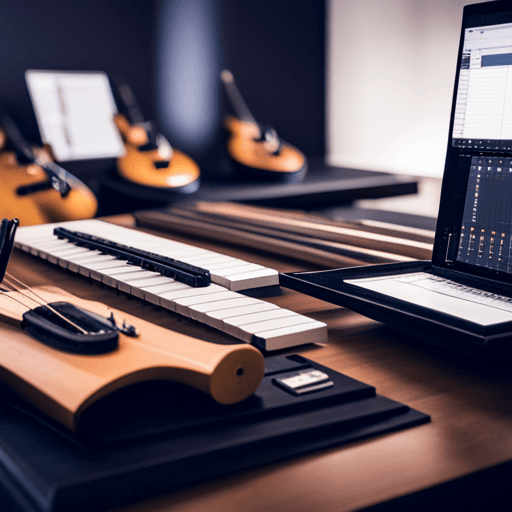
At the heart of computer-based music creation are programs called Digital Audio Workstations (DAWs). DAWs like Logic Pro, Cubase, and Pro Tools, give you a digital platform on which you can compose, record, and produce music.
These software solutions provide a rich set of tools and features that allow you to simulate the sounds of all types of musical instruments and to arrange them into full orchestral compositions. With a DAW, the only limit to what you can create is your own imagination.
Virtual Instruments
Virtual instruments take MIDI data – information about musical notes and their duration – and convert it into sound. This means that you can play a melody on a music keyboard – or even just type it in on your computer keyboard – and your DAW will use virtual instruments to make it sound like it was played by any instrument of your choosing.
It’s particularly impressive when this technology is used to simulate an entire orchestra. Programs known as orchestral sample libraries, like EastWest’s Quantum Leap Symphonic Orchestra or Native Instruments’ Symphony Series, can replicate the sound of every single instrument in an orchestra in stunning detail.
Understanding the Orchestra
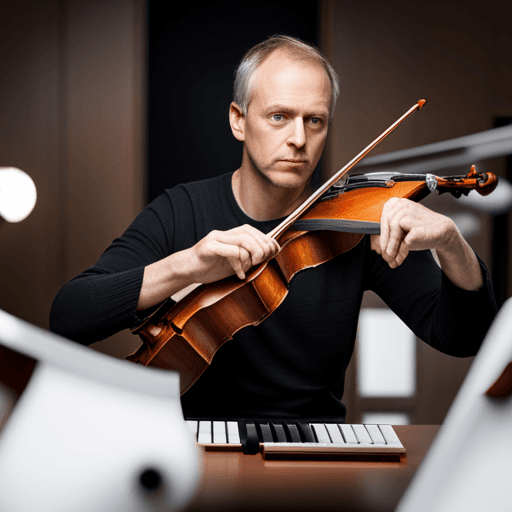
However, it’s important to remember that, while technology can provide the tools, you still need the skills and knowledge to use them effectively. Understanding how an orchestra works – how the different sections and instruments interact, the roles they each play, and the techniques they use – is crucial if you want to create realistic and evocative orchestral compositions, whether they’re for film scores, classical pieces, or even video game soundtracks.
Putting It All Together
To start composing, you generally begin by sketching out your initial ideas using a piano or other simple instrument. From there, you can build up your composition piece by piece, deciding which sections of the orchestra to use and where.
Each section can have multiple layers, allowing you to create complex and intricate compositions. Every note, every nuance, can be carefully crafted until you’ve created a complete orchestral piece, all from the comfort of your own home.