Best Limiter Plugin: What You Should Actually Choose For
best limiter plugin decisions are not about hype. The right best limiter plugin depends on what you need most: loudness, transparency, true-peak safety, CPU efficiency, or workflow speed. In my mastering work in Gothenburg, I choose by result, not by marketing claims, and this guide shows you how I do that.
If you want a quick reference first, I also keep a broader shortlist of best limiter plugin picks for 2026→. But here I’m going to make the decision practical: what to choose, when to choose it, and why one limiter wins over another in a real mastering chain.
Loudness vs transparency vs safety
These three goals fight each other more often than people admit. A loudness limiter can push level hard, but it may flatten transients and reduce punch. A transparent limiter protects the mix shape better, but it may not feel as aggressive when you drive it.
True-peak safety sits in its own lane. If you deliver to streaming services, broadcast, or files that will pass through conversion, you need a limiter that handles inter-sample peaks well. That’s why the best limiter plugin for one job can be the wrong choice for another.
Who this guide is for
This guide is for producers, mixing engineers, and mastering engineers who want a clear answer, not another vague roundup. If you master your own tracks, send files to clients, or need one audio limiter plugin that can handle different genres, this is for you.
I use different limiters depending on the session, but I always start with the same question: what outcome do I need? That mindset saves time and keeps me from overthinking the wrong variables. If you want a practical shortcut, the choice usually comes down to clean control, maximum loudness, or the fastest delivery.
How We Compared the Best Limiter Plugin Options
Evaluation criteria
I compared these tools the way I actually use them in real mastering sessions. I looked at ceiling behavior, gain reduction character, true-peak performance, CPU load, UI speed, and how each limiter translated on different playback systems. That matters more than any spec sheet.
I tested the plugins in Logic Pro through my Apollo Twin X Quad and checked playback on Genelec 8351A monitors, plus Neumann Studio ND 20 and Sony MDR-7506 headphones. I wanted to know which limiter stayed stable when I pushed it, which one stayed clean at the ceiling, and which one helped me work faster. The best limiter plugin is the one that helps me finish with fewer second guesses.
The main plugins here come from real use or long-standing industry trust: FabFilter Pro-L 2, Sonnox Oxford Limiter v2, Sonible smartlimit, UAD Precision Limiter, Waves L2 Ultramaximizer, PSP Xenon, and Flux Elixir. I also link a few deeper resources where context helps, including three limiter plugins that deliver louder, cleaner masters→.
What matters most in real mastering sessions
The best limiter plugin for you is the one that solves the actual problem in front of you. If the mix already sounds balanced and you only need 1-2 dB of level, transparency and low CPU matter more. If the song needs to compete in a loud playlist, then a limiter that stays punchy under heavier gain reduction becomes more valuable.
True-peak safety is another hard line. I’ve heard too many masters that looked fine in the DAW but clipped after conversion or streaming playback. That’s why I prefer limiters with solid true-peak handling for final delivery. For more loudness-focused tradeoffs, I also reference proven limiter plugin picks to boost loudness→.
Best Limiter Plugin Picks by Use Case
Best overall limiter plugin
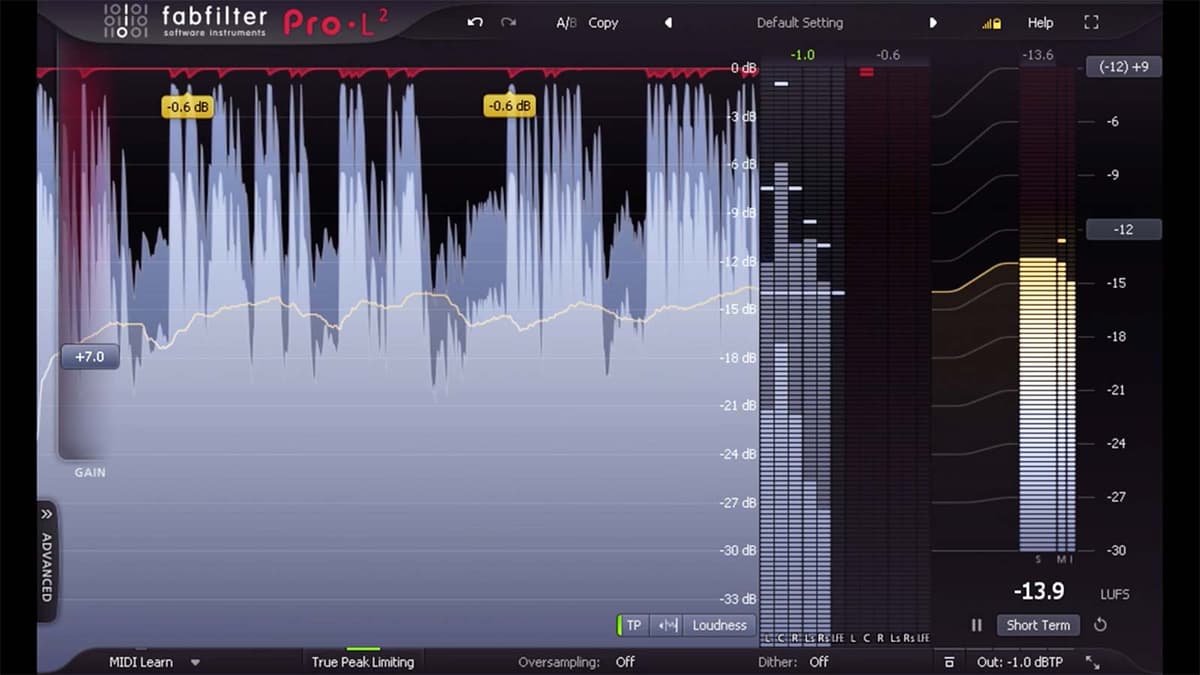
FabFilter Pro-L 2 is the limiter I trust most as an all-around choice. I use it in Logic Pro on mastering chains when I want a clean, flexible, and predictable result. It gives me excellent metering, multiple limiting styles, true-peak support, and a workflow that makes fast comparison easy.
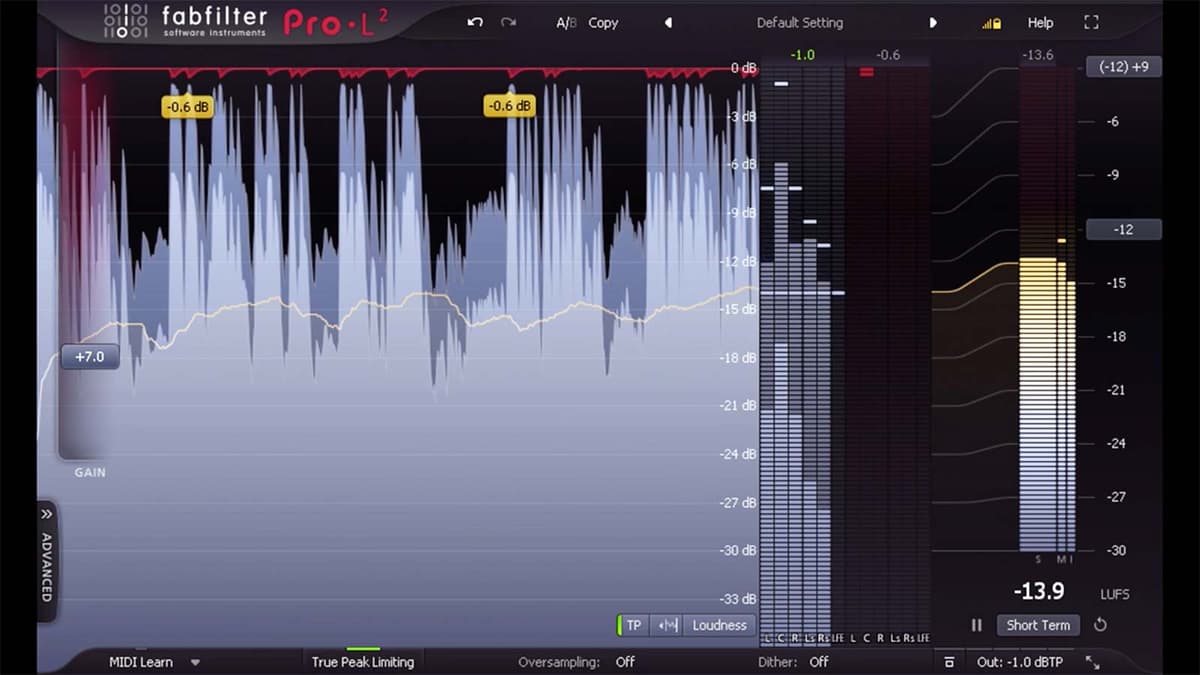
It doesn’t force a sonic fingerprint on the master. That’s why it works across film, commercial, and release work. In one recent vocal-heavy master, I chose Pro-L 2 over a louder-feeling option because the transient shape stayed more intact and the low end translated better on Genelecs and AirPods. On another project, I delivered a revision 20 minutes faster because I could set the ceiling, audition the styles, and confirm the result without opening another plugin.
If you want the safest first buy, this is still the best limiter plugin to start with. I use it when I want a reliable master that stays open, controlled, and easy to translate.
Best transparent limiter
PSP Xenon is the transparent limiter I’d pick when preservation matters most. In my experience, it stays closer to the original waveform than most limiters when you keep the gain reduction sensible. That makes it a strong choice for acoustic music, vocal-forward mixes, and masters where you want the limiter to disappear.
The control set is practical, not flashy. You can shape how it reacts, manage release behavior, and keep the result steady without a lot of guesswork. PSP Xenon is also the kind of tool that rewards careful gain staging, which is exactly what you want in a transparent limiter.
I do not reach for it when I need the loudest possible master. I reach for it when I want the mix to survive limiting with minimal personality. That is why it stays on my shortlist for the best limiter plugin conversations that focus on transparency instead of hype.
Best limiter for loud masters
Waves L2 Ultramaximizer is still relevant when the goal is simple: get loud, fast. It’s an older design, but it remains a useful loudness limiter when you want a familiar workflow and a straight line to level. The interface is minimal, which makes it fast to grab, set, and print.
It is not the cleanest limiter here, and I would not choose it for every mastering chain. However, if you want a direct, no-nonsense tool for competitive loudness, it still earns a place in the discussion. The best limiter plugin for loud masters is not always the newest one; sometimes it is the one that gets the job done with the fewest steps.
Best true peak limiter
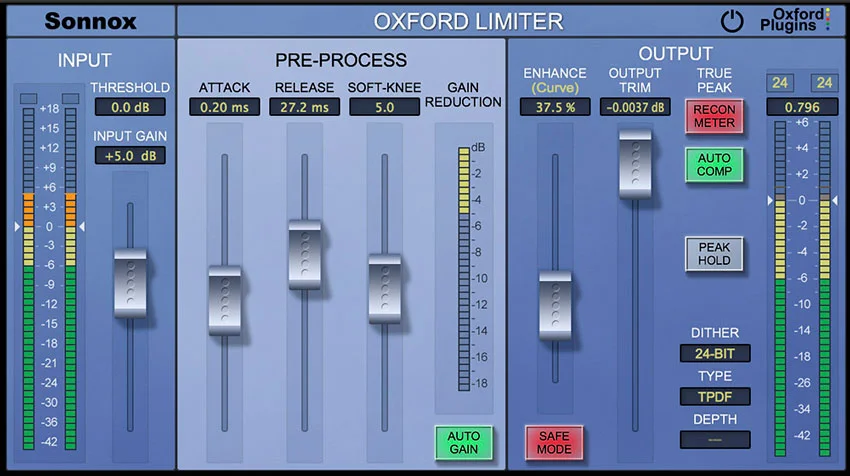
Sonnox Oxford Limiter v2 is the limiter I prefer when true-peak control matters and I want a professional final ceiling. Its strength is not hype or color. It is stability, control, and a polished final output that holds up well when I’m preparing delivery files.
I like it for clean mastering chains where I want careful control over the final output level and the confidence that I am not leaving hidden overs behind. It is not the most characterful limiter, but that is the point. If your main concern is final delivery safety, this is one of the best limiter plugin picks you can make.
Best budget limiter plugin
UAD Precision Limiter is the budget pick here because it gives you a straightforward limiter workflow without extra fluff. It is easy to use, sounds clean enough for many practical mastering tasks, and fits well when you want a simple final-stage tool inside the UAD ecosystem.
I do not think budget should mean compromised. It should mean efficient. The Precision Limiter gives you a reliable path to a finished master when you need to move quickly and keep costs down. If you are building a smaller plugin arsenal, it is one of the easiest best limiter plugin choices to justify.
Limiter Plugin Comparison Table
Ceiling, character, CPU, workflow, and price
| Plugin | Ceiling behavior | Character | CPU | Workflow speed | True-peak safety | Price |
|---|---|---|---|---|---|---|
| --- | --- | --- | --- | --- | --- | --- |
| FabFilter Pro-L 2 | Very stable, precise ceiling | Clean to slightly polished | Moderate | Very fast | Excellent | About $199 |
| PSP Xenon | Controlled and smooth | Very transparent | Moderate | Moderate | Strong | About $149-$199 |
| Sonnox Oxford Limiter v2 | Stable professional ceiling | Clean and controlled | Moderate | Fast | Excellent | About $125-$219 |
| Waves L2 Ultramaximizer | Predictable but older behavior | More obvious loudness fingerprint | Very low | Very fast | Good | About $29-$99 on sale |
| UAD Precision Limiter | Solid and straightforward | Clean and functional | Low | Fast | Good | Included or sold separately depending on bundle |
| Sonible smartlimit | Stable with modern workflow aids | Clean with slight helpful enhancement | Moderate | Fast | Strong | About $99-$129 |
| Flux Elixir | High-end, refined ceiling | Smooth and mastering-friendly | Higher | Slower | Excellent | About $149-$249 |
Quick decision matrix
If you want clean mastering, start with FabFilter Pro-L 2 or PSP Xenon. If you want maximum loudness, Waves L2 or Flux Elixir will get you there faster. If you want fast client delivery, UAD Precision Limiter and FabFilter Pro-L 2 both keep the workflow simple.
How to Choose the Right Limiter Plugin
For EDM and high-energy music
EDM needs punch, density, and a limiter that can stay composed when the chorus hits hard. In those sessions, I want a tool that can take more gain reduction without turning the kick and snare into mush. FabFilter Pro-L 2 works well because I can tune the style and ceiling carefully, while Waves L2 still works when speed matters more than nuance.
I also care about how the low end reacts. If the limiter starts breathing on every kick, the master loses impact fast. That’s why I test on my Genelecs and then confirm on headphones before I deliver.
For vocals and acoustic mixes
Vocals and acoustic material expose bad limiter behavior quickly. If the limiter smears consonants or dulls transients, you hear it immediately. PSP Xenon and Sonnox Oxford Limiter v2 both make sense here because they help preserve the mix shape and keep the final result natural.
For these genres, I often keep limiting light and focus on translation. The more delicate the mix, the more the best limiter plugin becomes the one you barely notice.
For fast client work and delivery
When I need to deliver quickly, I pick a limiter that lets me make confident decisions without digging through menus. FabFilter Pro-L 2 is excellent for that because the UI is fast and the metering gives me what I need immediately. UAD Precision Limiter also works well when I want a simpler route to a finished file.
If your job is to turn revisions around quickly, workflow speed matters almost as much as sound. A limiter that saves five minutes per mix becomes a major advantage over a month of client work.
Common Limiter Mistakes That Hurt Masters
Over-limiting and pumping
The most common mistake is pushing too hard because the meter says you can. When you over-limit, transients collapse, the mix pumps, and the master feels smaller even when it looks louder. I’d rather leave 1 dB on the table than destroy the groove.
Ignoring true peak settings
If you ignore true-peak settings, you can create clips that only show up after conversion. That hurts streaming delivery and can make a good master fail on playback systems outside your DAW. I treat true-peak control as part of the job, not an optional extra.
Chasing loudness over translation
A master that wins the loudness war but falls apart everywhere else is a bad master. I always check translation on monitors and headphones before I sign off. Loudness matters, but translation pays the bills.
My Recommended Decision Flow
If you want the cleanest result
Choose FabFilter Pro-L 2 first. If you want a very transparent alternative, try PSP Xenon next. Those are the two most reliable choices when your goal is to protect the mix and keep the limiter out of the way.
If you want maximum loudness
Choose Waves L2 Ultramaximizer if you want speed and familiarity. Choose Flux Elixir if you want a more refined high-end option and you are willing to spend more time dialing it in. That is the loudness side of the best limiter plugin decision.
If you want the fastest workflow
Choose FabFilter Pro-L 2 for the most complete quick workflow, or UAD Precision Limiter if you want a minimal setup. In client work, speed and confidence often matter more than chasing another half dB.
FAQ
What is the best limiter plugin for mastering?
For most mastering work, I start with FabFilter Pro-L 2 because it balances transparency, control, and workflow speed better than most tools. If I want a more invisible result, I move to PSP Xenon. If I need final delivery safety, Sonnox Oxford Limiter v2 is a strong choice.
Do I need a true peak limiter?
Yes, if you deliver to streaming platforms, broadcast, or any workflow where conversion can create inter-sample peaks. True-peak support helps prevent hidden clipping after export. If you only make demo refs, you may not need it every time, but for final masters I treat it as standard.
Should I use a limiter on the master bus?
Yes, if you are using it as the final stage of control and level management. No, if you are using it to fix a broken mix. A limiter should finish a balanced mix, not rescue a bad one. That rule keeps masters cleaner and faster to approve.
What is the difference between a transparent limiter and a loudness limiter?
A transparent limiter tries to preserve the original mix balance and transient shape. A loudness limiter is built to push level harder, often with more audible character. Both have a place. The right one depends on whether you care more about invisible control or aggressive loudness.
Final verdict
The best limiter plugin is the one that matches your actual goal, not the one with the loudest marketing. If you want the cleanest result, start with FabFilter Pro-L 2. If you want the most transparent path, use PSP Xenon. If you want loudness fast, Waves L2 still gets the job done.
My advice is simple: test the comparison shortlist in your own mastering chain, listen on your main monitors and headphones, and pick the limiter that gives you the fastest route to a master that translates. If you want more context, read the comparison shortlist→ and try the recommended plugins in a real session.